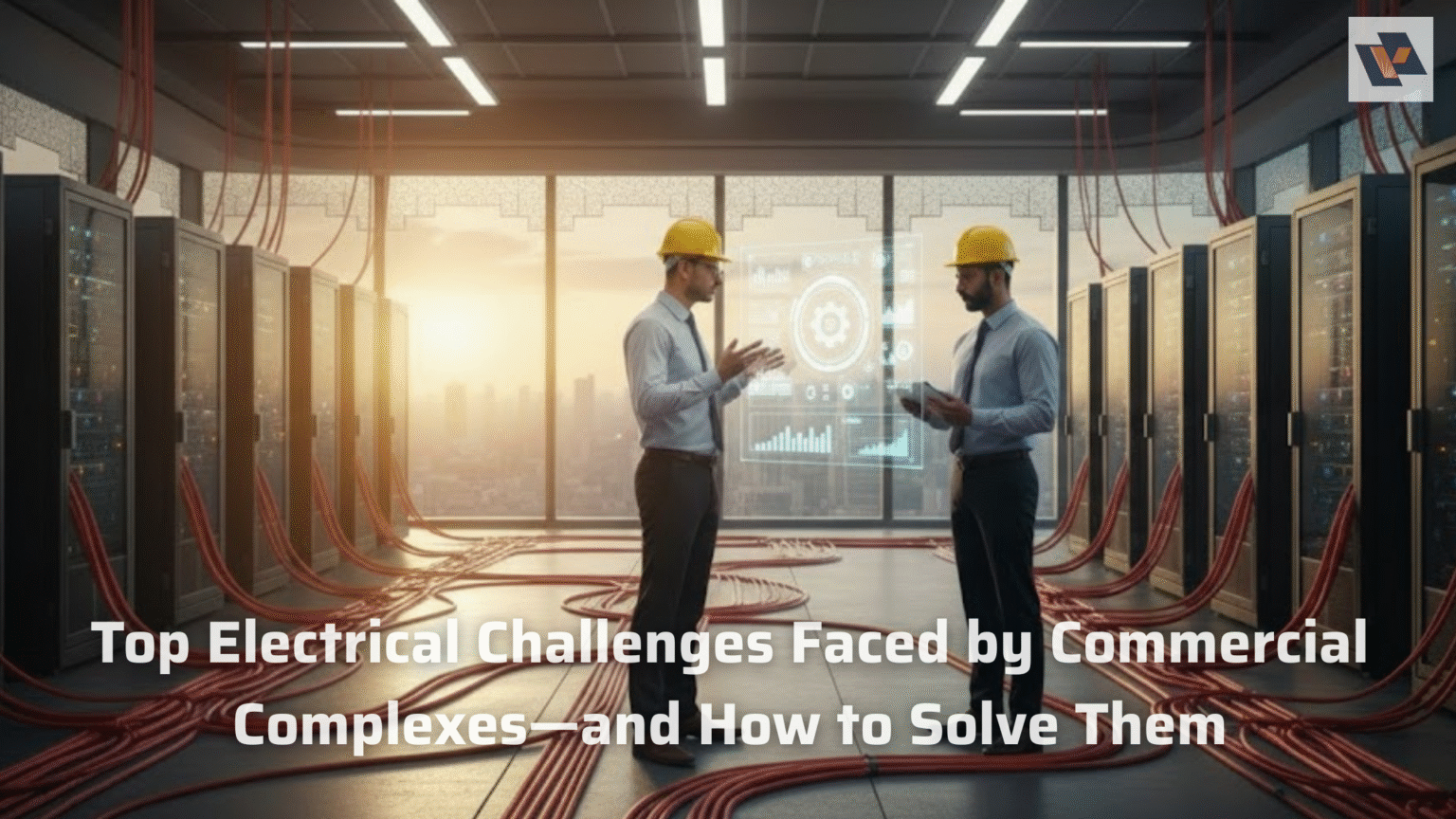
Running a commercial complex involves far more than managing tenants and keeping operations smooth. One of the most complex yet crucial responsibilities is ensuring a reliable and safe electrical system. Whether it’s a retail hub, corporate office, or mixed-use commercial space, electrical issues can disrupt business continuity, increase maintenance costs, and even threaten safety.
In the fast-paced world of commercial property operations, effectively addressing electrical problems is a key part of long-term commercial complex maintenance. Understanding common challenges and how to solve them helps property managers and facility owners maintain operational efficiency and avoid costly downtime.
1. Power Fluctuations and Voltage Drops
Power fluctuations are among the most frequent electrical challenges in large complexes. Sudden voltage drops can cause lights to flicker, disrupt HVAC performance, and damage sensitive equipment like computers, elevators, and security systems. These fluctuations often occur due to overloaded circuits, faulty wiring, or inconsistent grid supply.
Solution:
Regular energy audits should be part of every commercial complex maintenance plan. A licensed electrician can assess the distribution panels, check the load balance, and recommend surge protection systems. Installing voltage stabilizers or power-conditioning devices also ensures steady power delivery, protecting essential equipment from damage.
Additionally, having a dedicated facility management team oversee electrical load management helps maintain consistent power performance, especially during high-demand hours.
2. Overloaded Electrical Circuits
As businesses expand, the electrical load in office and retail spaces increases. Adding more computers, lighting fixtures, or HVAC units without upgrading the system can overload circuits. This not only causes frequent tripping of breakers but also raises fire risks, a serious threat in any commercial complex.
Solution:
The best approach is preventive system scaling. Facility owners should partner with experienced technicians who provide scalable services for commercial complexes. Upgrading wiring capacity, adding subpanels, and using smart metering systems help prevent overload. Additionally, maintaining detailed electrical schematics ensures that any expansions or tenant fit-outs are safely integrated into the existing system.
Routine inspection and documentation of load distribution can significantly reduce the likelihood of circuit overuse.
3. Faulty Wiring and Outdated Infrastructure
Many commercial complexes, especially older ones still rely on outdated wiring and switchgear. These aging elements can lead to short circuits, fire hazards, and unpredictable power failures. Poor-quality wiring or moisture infiltration in conduits can worsen the situation, leading to frequent downtime and safety risks.
Solution:
Regular inspections as part of scheduled commercial complex maintenance help detect worn-out cables and corroded connections. It’s advisable to implement phased rewiring projects that modernize infrastructure without disrupting ongoing business operations.
Facilities managers should also consider upgrading to energy-efficient lighting and power systems that support better current handling and safety compliance. Smart monitoring systems can alert maintenance teams about potential faults before they escalate.
4. Inefficient Lighting Systems
Lighting contributes significantly to energy consumption in commercial spaces. Outdated fixtures, poor design, or faulty controls often lead to high electricity bills and reduced illumination quality. Inadequate lighting not only affects aesthetics but can also impact employee productivity and tenant satisfaction.
Solution:
Modern LED lighting solutions with motion sensors and timed controls drastically reduce energy use. As part of comprehensive office complex facility solutions, upgrading lighting systems should include sensor-based automation and daylight integration technology.
Energy-efficient fixtures not only lower maintenance costs but also enhance the building’s sustainability rating, an important factor for today’s eco-conscious tenants.
5. Inconsistent Backup Power Systems
In large commercial complexes, even brief power interruptions can cause major disruptions. Without a reliable backup system, building operations, elevators, security systems, and IT infrastructure can all be compromised.
Solution:
A robust uninterruptible power supply (UPS) and generator setup is essential. Regular generator testing, fuel checks, and load simulations ensure backup systems function when required. Facility teams should schedule periodic maintenance of automatic changeover panels to guarantee smooth transitions during outages.
Working with professional technicians who deliver tailored services for commercial complexes ensures the system can handle the property’s specific load demands during emergencies.
6. Poor Energy Management and Monitoring
Energy inefficiency remains a hidden challenge for many property managers. Without real-time data, it’s hard to pinpoint where and how energy is being wasted. This issue directly impacts operational costs and sustainability goals.
Solution:
Implement smart building management systems (BMS) as part of office complex facility solutions. These systems monitor energy patterns, detect inefficiencies, and automate adjustments in lighting, HVAC, and power systems.
Such intelligent monitoring not only reduces energy bills but also contributes to a more sustainable commercial infrastructure. Over time, continuous optimization results in better tenant satisfaction and improved property valuation.
7. Non-Compliance with Safety Codes and Regulations
Commercial buildings must adhere to stringent local electrical safety codes. Failing to comply with these standards can result in penalties, insurance complications, or unsafe conditions for occupants.
Solution:
Partner with experienced electrical service providers who stay updated on local safety laws and global best practices. Regular audits, documentation updates, and adherence to fire-safety protocols should be integrated into commercial complex maintenance schedules.
Periodic staff training on electrical safety awareness also helps prevent accidents and ensures compliance readiness during official inspections.
Building Long-Term Electrical Reliability
Electrical reliability is not achieved overnight it’s the result of systematic maintenance, periodic audits, and professional oversight. For property managers aiming to keep their buildings operationally efficient and safe, investing in proactive services for commercial complexes is essential.
A structured maintenance plan covering inspection, load testing, and energy optimization ensures every component from lighting to main panels functions smoothly. Comprehensive office complex facility solutions should address not just immediate repairs but also future-proofing strategies that adapt to evolving tenant needs and technology upgrades.
Commercial property success hinges on seamless operations. By understanding the top electrical challenges and investing in preventive measures, property managers can significantly minimize downtime, extend equipment life, and enhance occupant safety all while maintaining cost efficiency.